Turn intent into records.
Capture leads from pages, WhatsApp, email, partner workflows, and API routes before they disappear into scattered channels.
- Embedded lead widgets and routing
- WhatsApp and inbox intake paths
- Structured lead injection API
One CRM workspace to capture demand, follow up in context, and move customers into support and delivery.
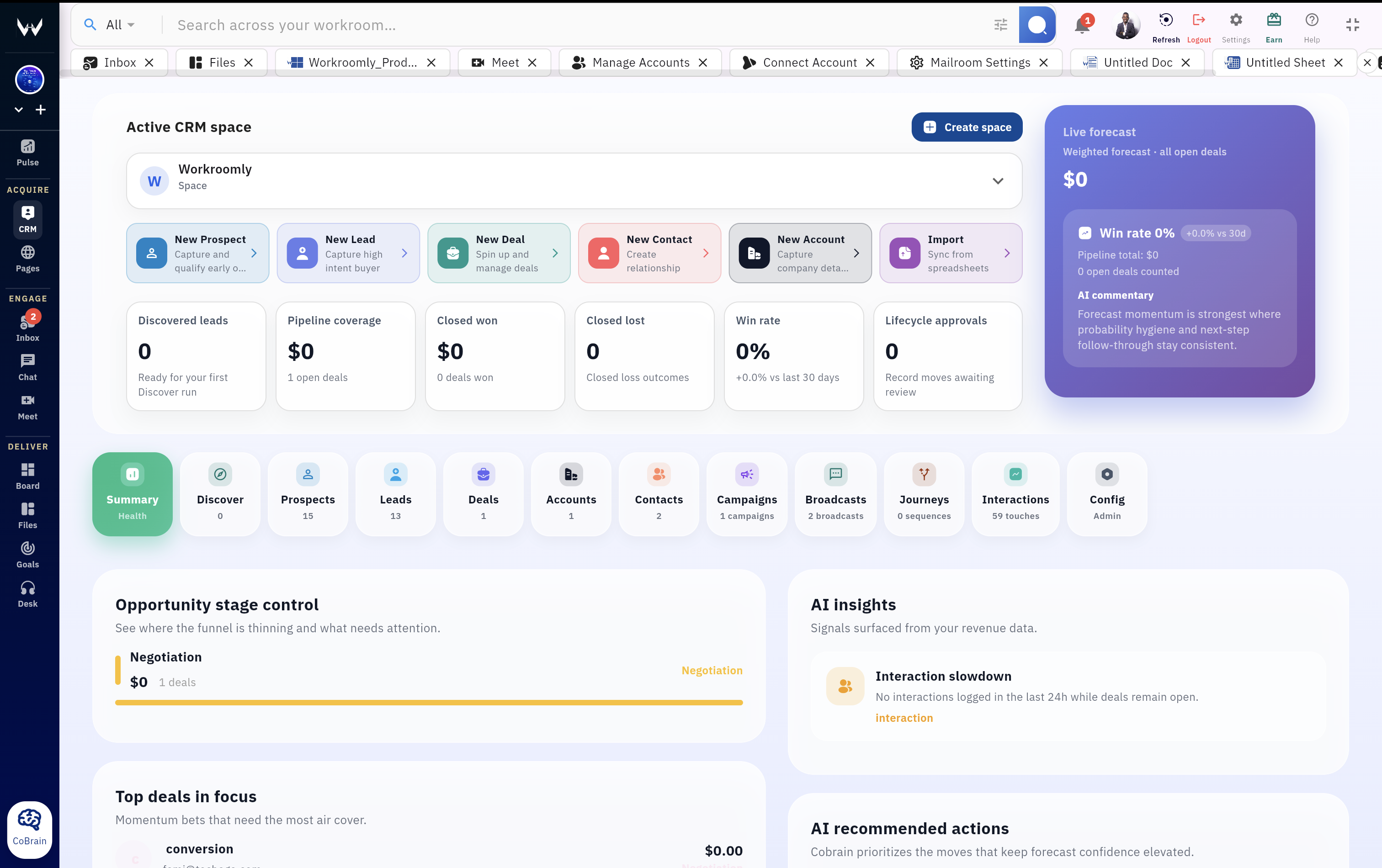
Workroomly makes the CRM story obvious: discover demand, engage the right people, then deliver the work without losing the customer context that got you there.
Capture leads from pages, WhatsApp, email, partner workflows, and API routes before they disappear into scattered channels.
Qualify prospects, manage deals, and run campaigns, broadcasts, and sequences from the same record your team already trusts.
Move customers into support, delivery, meetings, files, goals, and internal execution without forcing the team to rebuild context.
Bring website, WhatsApp, inbox, and API demand into one clean customer intake path.
Qualify, assign, follow up, broadcast, and sequence from the same CRM record.
Push the right context into support, delivery, meetings, files, and team execution.
Keep every customer interaction connected so renewals and expansion do not start cold.
A lot of businesses capture demand in one place, talk in another, track deals somewhere else, and support customers from a fourth tool. That breaks speed, context, and accountability.
Result Teams keep switching tools while customers fall through the cracks.
Result Every interaction moves the customer forward instead of starting from scratch.
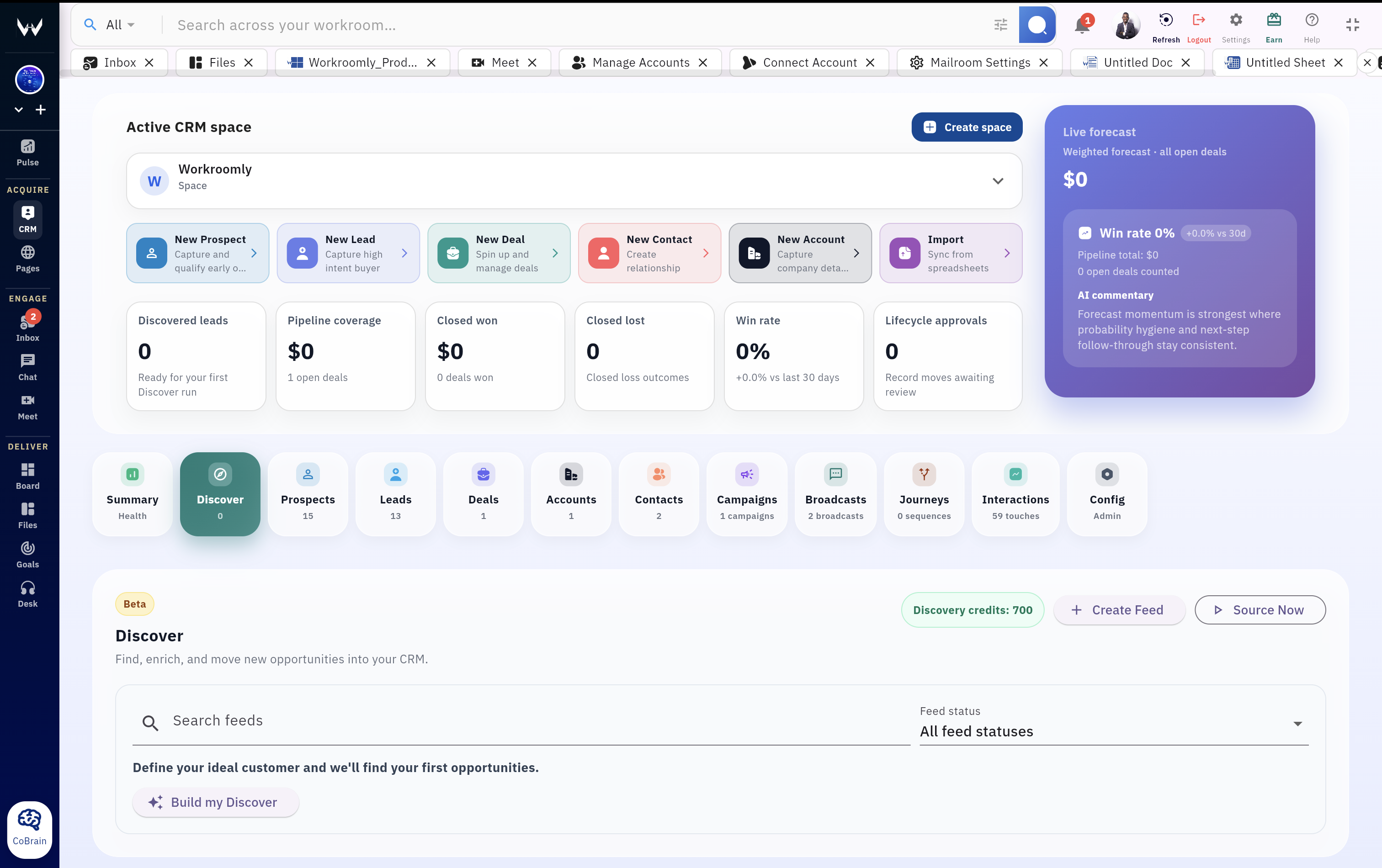
Discovery starts before the pipeline. Workroomly turns inbound attention into structured CRM records before your team has to chase spreadsheets, chat screenshots, or disconnected forms.
Deploy Workroomly lead widgets on your marketing pages and landing pages so every serious inquiry enters the CRM with context.
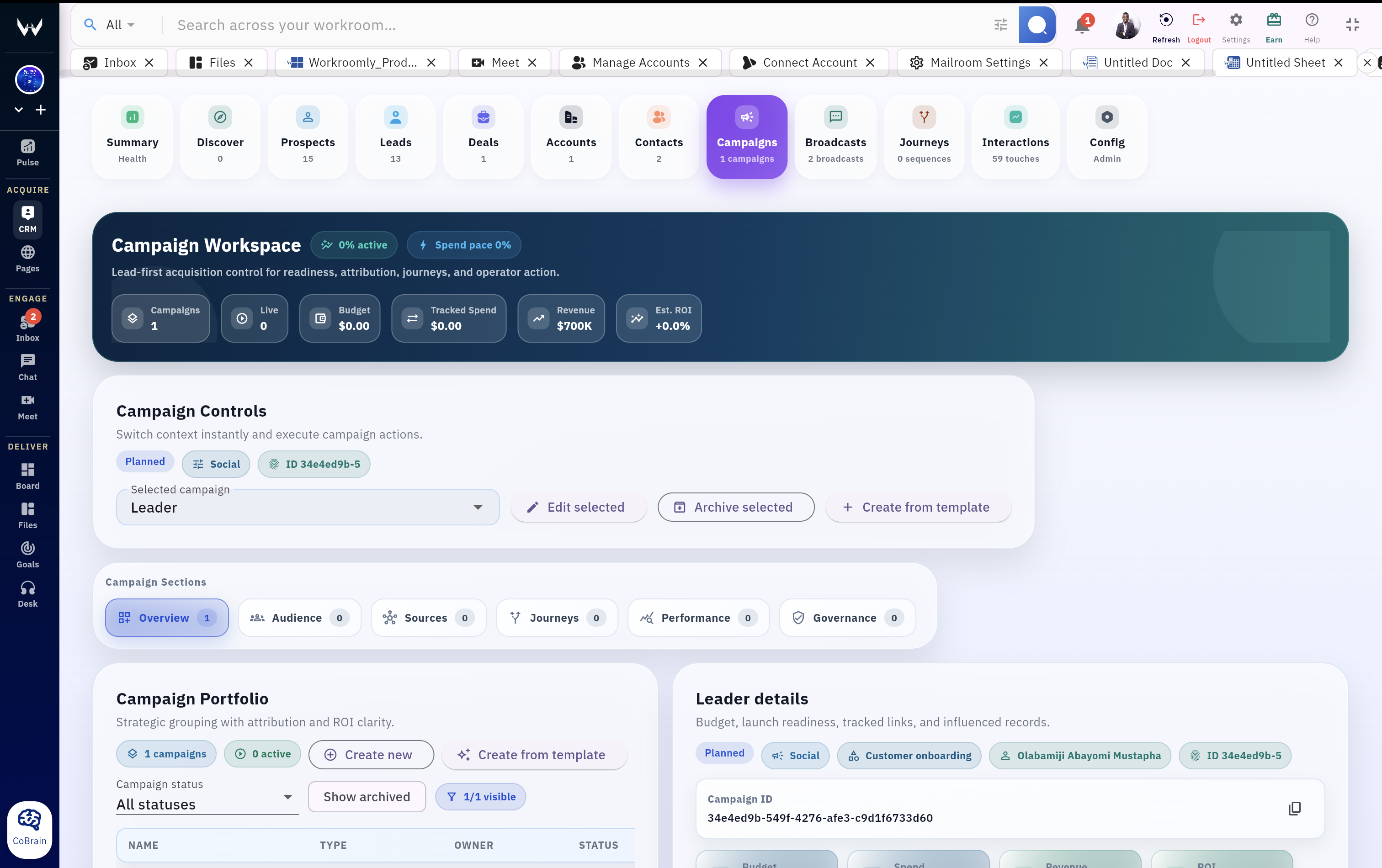
Turn inbound WhatsApp conversations into CRM leads automatically so high-intent conversations do not remain trapped in chat threads.
Push discovery signals from apps, landing pages, partner systems, or ad workflows into Workroomly with a structured intake path.
Separate early inbound prospects from qualified leads so your team can work the funnel with more precision.
Bring capture, routing, and ownership closer together so follow-up starts faster and stays visible.
Workroomly keeps engagement close to customer truth: deals, contacts, campaigns, broadcasts, sequences, owners, and next steps in one operating surface.
Operate from one CRM surface built around how customer teams discover, qualify, follow up, and hand off work.
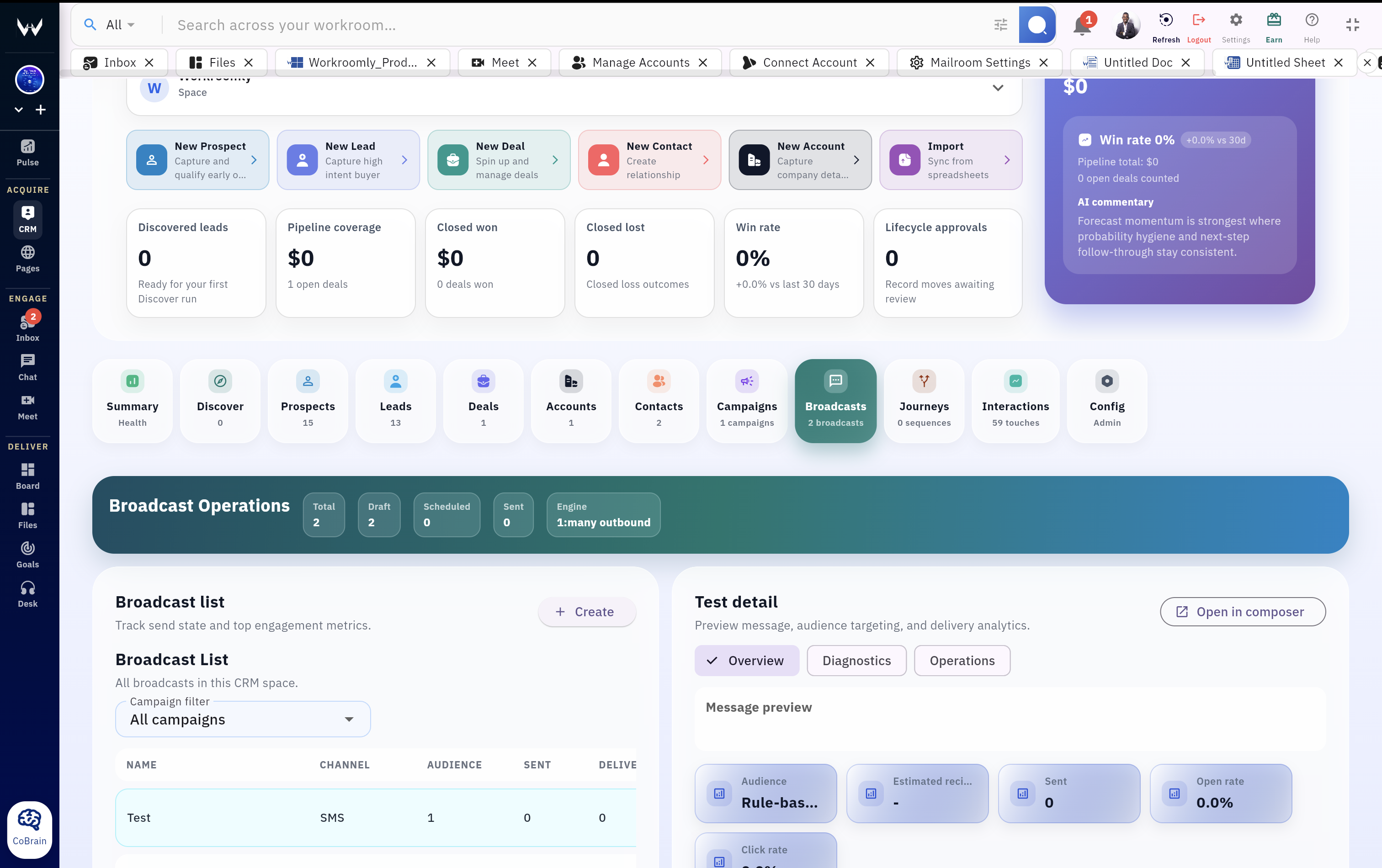
Run outbound and follow-through from the same system where your customer records, deal stages, and team context already exist.
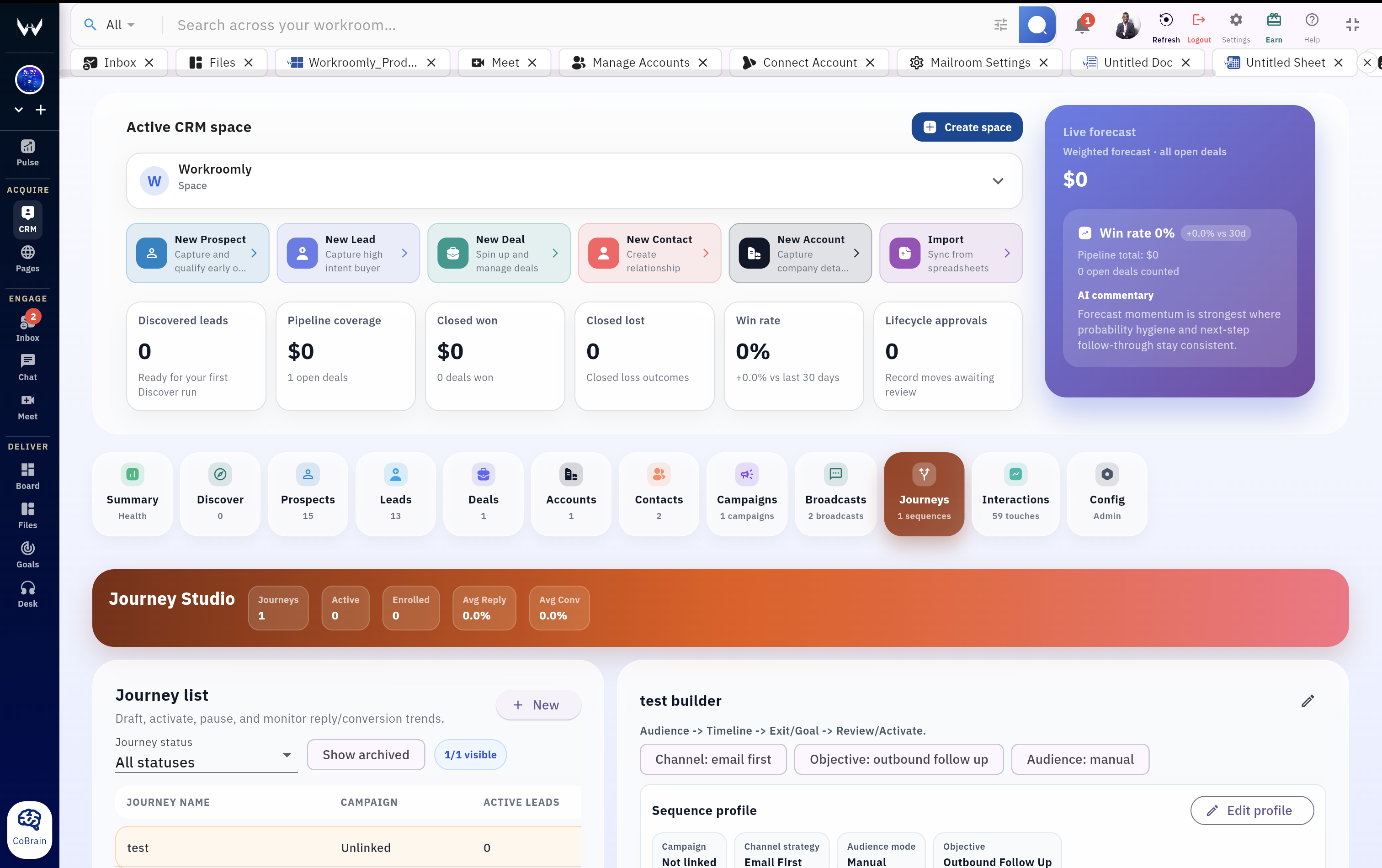
Keep companies, people, and relationship context centralized so every team works from the same customer memory.
Control stage movement, customer data structure, and operational discipline with lifecycle-aware setup.
Support does not sit in another silo. Desk can operate with account context, ticket history, and internal owners connected.
This is the core advantage: discovery, engagement, delivery, support, and retention stay connected instead of being spread across tools.
Lead widgets, WhatsApp, inboxes, and APIs bring new demand into one intake path.
Move records from prospect to lead with the right ownership, structure, and context.
Run deals, campaigns, broadcasts, and sequences without separating outreach from CRM truth.
Customer requests and tickets stay connected to the relationship, not isolated in another queue.
Use one operating record to protect renewals, follow through on service, and grow account value over time.
A lot of CRM pages stop at pipeline. A lot of execution tools start after the customer is won. Workroomly is built around the full Discover → Engage → Deliver movement.
Scroll horizontally to view full comparison
| Capability | Workroomly | HubSpot | Zoho | ClickUp |
|---|---|---|---|---|
| Prospect → Lead → Deal lifecycle | Built In Lifecycle tabs are part of the core CRM workspace. | CRM Strong Strong sales motion, but broader execution often lives elsewhere. | Suite-Based Broad coverage, often spread across multiple products and setup paths. | Execution First Best known as a work management system, not a lifecycle CRM. |
| Capture channels into CRM | Multi-Channel Lead widgets, WhatsApp, inboxes, and lead injection API paths. | Tool-Dependent Powerful, but capture setup often depends on broader stack choices. | Configurable Capable, with more modular orchestration across products. | Not Core Lead capture is not the center of the product story. |
| Campaigns, broadcasts, sequences in CRM | Unified Outreach and follow-through sit inside the same operating surface. | Strong but layered Strong marketing and sales tools, often sold and managed in tiers. | Broad suite Available across the suite with more product coordination. | External Stack Usually requires separate tools for serious CRM outreach motion. |
| Support connected to account history | Native Context Desk can operate with full customer relationship awareness. | Strong but segmented Service tooling is powerful but often product-tier dependent. | Multi-App Context Possible, though setup and navigation are more suite-driven. | Not Primary Customer support is not the native center of the system. |
| Internal execution tied to CRM | Same Workspace Boards, goals, meetings, chat, and files stay close to customer work. | Usually External Often paired with a separate execution system. | Suite Possible Possible across modules, but heavier to unify into one experience. | Strong Execution Execution is strong, but lifecycle CRM is not the core center. |
The value is not another place to list deals. It is better discovery, faster engagement, clearer ownership, and a customer record that survives every handoff.
The team can see deals, but customer context still breaks between capture, conversations, support, and delivery.
Every channel and every handoff points back to the same customer workspace, so teams move faster with less context loss.
Start with a CRM that captures intent, drives follow-up, and keeps support and delivery in the same customer context.